


Heart Healthy Weight Loss Diet
Weight loss does not have to be extreme to be effective, and eating for heart health does not mean sacrificing enjoyment. A heart healthy weight loss diet focuses on nourishing your body with wholesome foods that support cardiovascular health while encouraging steady, sustainable weight loss.
Rather than relying on fad diets or restrictive rules, this approach emphasizes balance, consistency, and long-term habits that improve both physical health and overall well-being.
What Is a Heart-Healthy Weight Loss Diet?

A heart healthy weight loss diet is built around nutrient-dense foods that help reduce excess body weight while also supporting the heart. The primary goals of this approach include lowering cholesterol levels, reducing blood pressure, managing inflammation, and maintaining healthy energy levels.
Instead of focusing solely on calorie reduction, it prioritizes food quality and mindful eating habits that naturally support weight loss.
Key Foods That Support Heart Health and Weight Loss
Fruits and Vegetables
Fruits and vegetables form the foundation of a heart-healthy diet. They are rich in fiber, vitamins, and antioxidants, which help promote fullness and reduce the risk of heart disease. Consuming a variety of colors ensures a wide range of nutrients and supports balanced meals.
Examples include leafy greens, berries, citrus fruits, carrots, bell peppers, and cruciferous vegetables such as broccoli and cauliflower.
Whole Grains
Whole grains provide lasting energy and support stable blood sugar levels. Because they contain more fiber than refined grains, they help control appetite and support digestion.
Oats, brown rice, quinoa, whole-grain bread, and whole-grain pasta are excellent choices when consumed in appropriate portions.
Lean Protein Sources
Protein plays an important role in preserving muscle mass and promoting satiety during weight loss. Lean protein options are especially beneficial for heart health.
Healthy choices include fish, skinless poultry, legumes, tofu, low-fat dairy, and Greek yogurt. Fatty fish, in particular, provide omega-3 fatty acids that support heart function.
Healthy Fats
Healthy fats are an essential part of a balanced diet and can improve cholesterol levels when consumed in moderation. Unsaturated fats support heart health and enhance the flavor and satisfaction of meals.
Sources of healthy fats include olive oil, avocados, nuts, seeds, and fatty fish. Portion awareness is important, as fats are calorie-dense.
Foods to Limit for Better Heart Health
A heart-healthy weight loss diet does not require eliminating foods entirely, but certain items should be limited. Highly processed foods, fried foods, sugary beverages, excess sodium, and refined carbohydrates can contribute to weight gain and increase the risk of heart disease.
Focusing on moderation rather than restriction helps support consistency and long-term success.
Portion Control Without Obsession
Weight loss does not require constant calorie counting. Simple strategies can help manage portions naturally, such as using smaller plates, eating slowly, planning meals ahead of time, and paying attention to hunger and fullness cues.
Mindful eating allows you to develop a healthier relationship with food while still achieving weight loss goals.
Lifestyle Habits That Enhance Results
Physical Activity
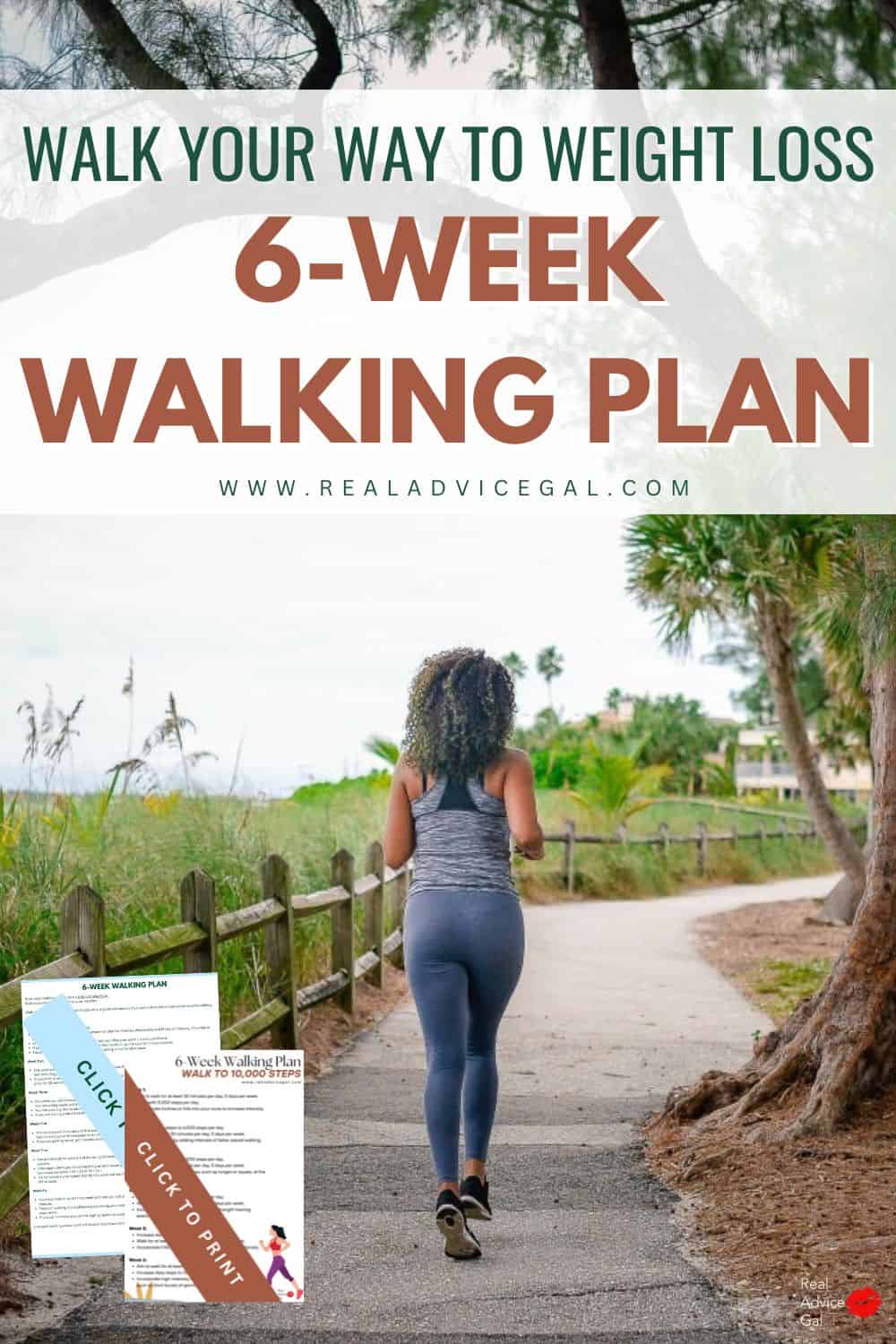
Regular movement supports both heart health and weight management. Activities such as walking, swimming, cycling, or strength training can be adjusted to suit different fitness levels. Consistency is more important than intensity.
Hydration
Adequate hydration supports digestion, circulation, and appetite control. Drinking enough water throughout the day can help reduce unnecessary snacking and support overall health.
Sleep and Stress Management
Quality sleep and stress management play important roles in weight loss and heart health. Chronic stress and poor sleep can affect hormones that regulate appetite and metabolism. Establishing routines that promote rest and relaxation is essential.
A Sustainable Approach to Long-Term Health
The heart-healthy weight loss diet is not about perfection, rigid rules, or short-term results. It is a sustainable lifestyle approach that encourages smarter food choices, balanced habits, and patience with the process.
By focusing on progress rather than perfection, you can protect your heart, support healthy weight loss, and build habits that last.
7-Day Heart-Healthy Weight Loss Meal Plan
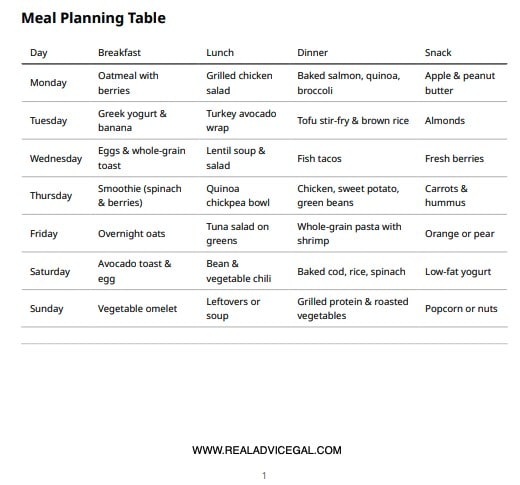
Get the Heart Healthy 7-Day Meal Plan
Day 1
Breakfast:
Oatmeal made with low-fat milk, topped with berries and a sprinkle of chopped nuts
Lunch:
Grilled chicken salad with mixed greens, tomatoes, cucumbers, olive oil, and lemon
Dinner:
Baked salmon, quinoa, and steamed broccoli
Snack:
Apple slices with a tablespoon of natural peanut butter
Day 2
Breakfast:
Greek yogurt with sliced banana and chia seeds
Lunch:
Turkey and avocado whole-grain wrap with leafy greens
Dinner:
Stir-fried tofu with mixed vegetables and brown rice
Snack:
Handful of almonds
Day 3
Breakfast:
Scrambled eggs with spinach and whole-grain toast
Lunch:
Lentil soup with a side salad
Dinner:
Grilled fish tacos on corn tortillas with cabbage slaw
Snack:
Fresh berries
Day 4
Breakfast:
Smoothie with spinach, frozen berries, Greek yogurt, and flaxseed
Lunch:
Quinoa bowl with chickpeas, cucumbers, tomatoes, and olive oil dressing
Dinner:
Roasted chicken breast, sweet potato, and green beans
Snack:
Carrot sticks with hummus
Day 5
Breakfast:
Overnight oats with oats, low-fat milk, cinnamon, and blueberries
Lunch:
Tuna salad over mixed greens (made with olive oil or Greek yogurt)
Dinner:
Whole-grain pasta with tomato sauce, vegetables, and grilled shrimp
Snack:
Orange or pear
Day 6
Breakfast:
Whole-grain toast with avocado and a boiled egg
Lunch:
Vegetable and bean chili
Dinner:
Baked cod, brown rice, and sautéed spinach
Snack:
Low-fat yogurt
Day 7
Breakfast:
Omelet with vegetables and a slice of whole-grain toast
Lunch:
Leftover chili or soup with side salad
Dinner:
Grilled chicken or fish, roasted vegetables, and quinoa
Snack:
Air-popped popcorn or nuts
Heart-Healthy Grocery List
Produce
* Spinach, kale, mixed greens
* Broccoli, green beans, bell peppers
* Sweet potatoes
* Tomatoes, cucumbers
* Berries, apples, bananas, oranges
* Garlic, onions, lemons
Whole Grains
* Oats
* Brown rice
* Quinoa
* Whole-grain bread
* Whole-grain pasta
* Corn tortillas
Protein
* Salmon, cod, tuna
* Skinless chicken breast
* Eggs
* Greek yogurt (low-fat)
* Tofu
* Lentils, chickpeas, beans
Healthy Fats
* Olive oil
* Avocados
* Nuts (almonds, walnuts)
* Seeds (chia, flax)
* Natural nut butter
Dairy & Alternatives
* Low-fat milk or plant-based milk
* Low-fat yogurt
Pantry & Extras
* Low-sodium broth
* Herbs and spices (pepper, turmeric, garlic powder)
* Tomato sauce (low sodium)
* Hummus
Helpful Tips for Success
* Aim for balanced meals with protein, fiber, and healthy fats
* Prep grains and proteins ahead of time to save effort
* Drink water consistently throughout the day
* Adjust portions based on hunger and activity level
Print the Heart Healthy 7-Day Meal Plan
Check out these Heart Healthy Weight Loss Diet Tips and find out how you can turn your favorite recipes into Heart Smart ones.
Some people struggle to lose weight and you read a story of why one writer choose to have the Gastric Sleeve..

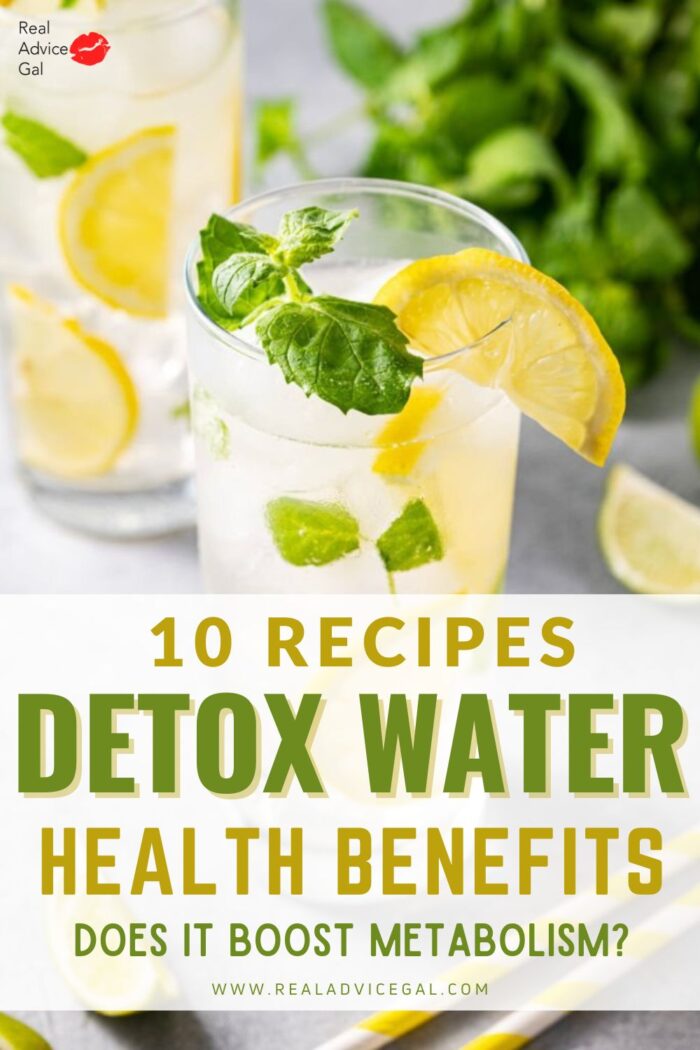
How to Make Cucumber Water – Detox Water Recipes

Cook, Baker, Phototaker, Fitness Mover and Shaker, Cupcake Tester, Deal Maker, Adventurous Undertaker, Do Good “Deeder”, Teacher, Mom, Wife, Patriot for Life & Giver of Good Advice – RealAdviceGal